Coquille Sunset

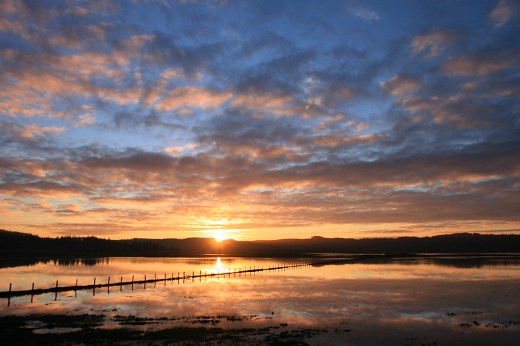
Sunset: Coquille, Oregon

Canon 30D, 17-40 f/4L,  ISO: 100, aperture: f/6.3, shutter: 1/60 second, exposure bias: +0.7 step, filter: 2 step soft edge graduated neutral density, tripod: yes, post: PS2

It’s not unusual for the waters of the Coquille River to flood into the adjacent agricultural lands.  The farmers and ranchers expect it so have time to move animals and equipment to higher ground.  Those flooded pastures provide nice photo ops.  For shots like this I typically use a split neutral density to reduce the contrast between the sky and foreground.  Lightroom has a similar filter that can be applied in post, but you’ll get better results by getting the exposure ‘right’ in the camera.  Besides a couple of split NDs the only other filter I carry is a polarizer.

Posted in Landscapes, Sunsets | Tagged , | Leave a comment

Jack Lake, Central Oregon Cascades

Thunderhead over Jack Lake

Canon 30D, 17-40 f/4L, ISO: 100, aperture: f/16, shutter: 1/8 second, exposure bias: -0.7 step, focal length: 17mm, filter: circular polarizer, tripod: yes, B&W conversion with Lightroom 3

Jack Lake in the Central Oregon Cascades is at one of the trailheads leading into the Mount Jefferson Wilderness.  It’s a beautiful alpine lake with plenty of mosquitoes in early summer.  I usually put off my trips into the backcounty until after first frost in the fall, mainly to avoid the bugs (people are less numerous too).  The thunderhead in the photo spawned a full-fledged rain and hail storm.  We were on the trail about a mile from the car when the storm hit.  I buried my camera deep in my pack to keep it dry.  Lesson learned: carry a couple of Ziploc plastic bags for camera gear when on the trail.

Thunder sky near Canyon Creek
Mount Jefferson Wilderness

Posted in Landscapes, Sunsets | Tagged , , | Leave a comment

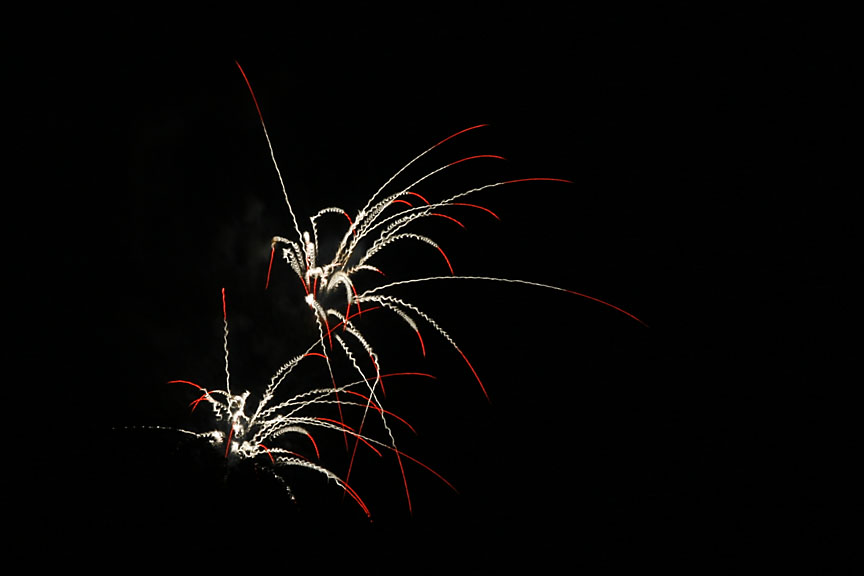
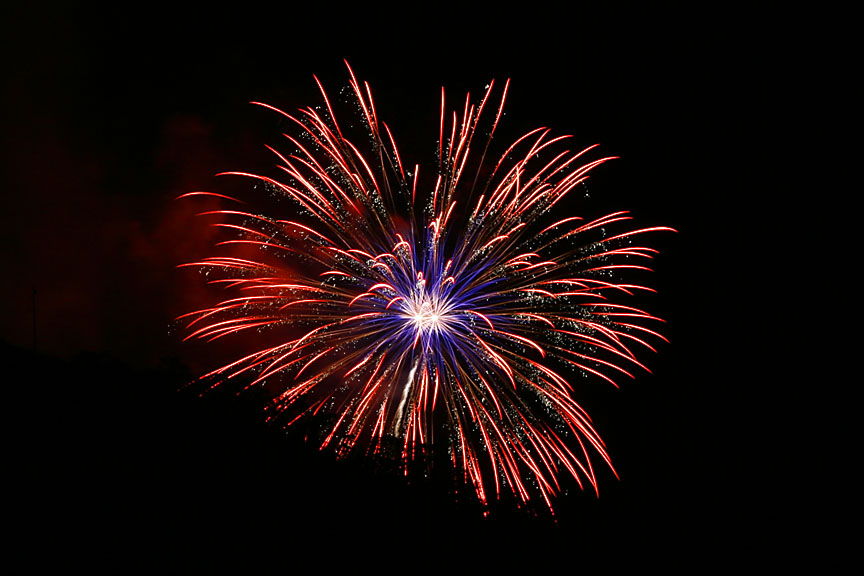
Fireworks

Canon 30D, 70-200 f/4L, tripod: yes, cable release: yes
ISO: 100, manual mode- aperture: f/11, shutter: 4 seconds

I was about a mile away from the action and shooting over a tree-lined ridge.  You can see the trees in the lower left corner of the photos.  All three exposures were taken with the same camera settings.  The biggest challenge was anticipating when to start the exposures to achieve the best ‘trails’.

Posted in Landscapes | Tagged | Leave a comment

Astoria, Oregon

Astoria-Megler Bridge, Astoria, Oregon

Canon 30D, 17-40 f/4L, tripod: yes, cable release: yes
HDR: 5 exposures, -2, -1, 0, +1, +2
Software: Photomatic Pro and Lightroom 3

I got up before first light to set up for this photo.  The sky was very overcast so I didn’t have much hope of good light.  But to my surprise, as the sun came up, the sky opened enough to provide some nice light and color.  I knew if I exposed for the sky alone the bridge would just be a black silhouette, so to increase the dynamic range I grabbed 5 exposures as noted above.  The images were combined with Photomatic and imported into Lightroom for color adjustment and local sharpening with the masking tool.


Posted in Landscapes, Sunsets | Tagged , , , | Leave a comment

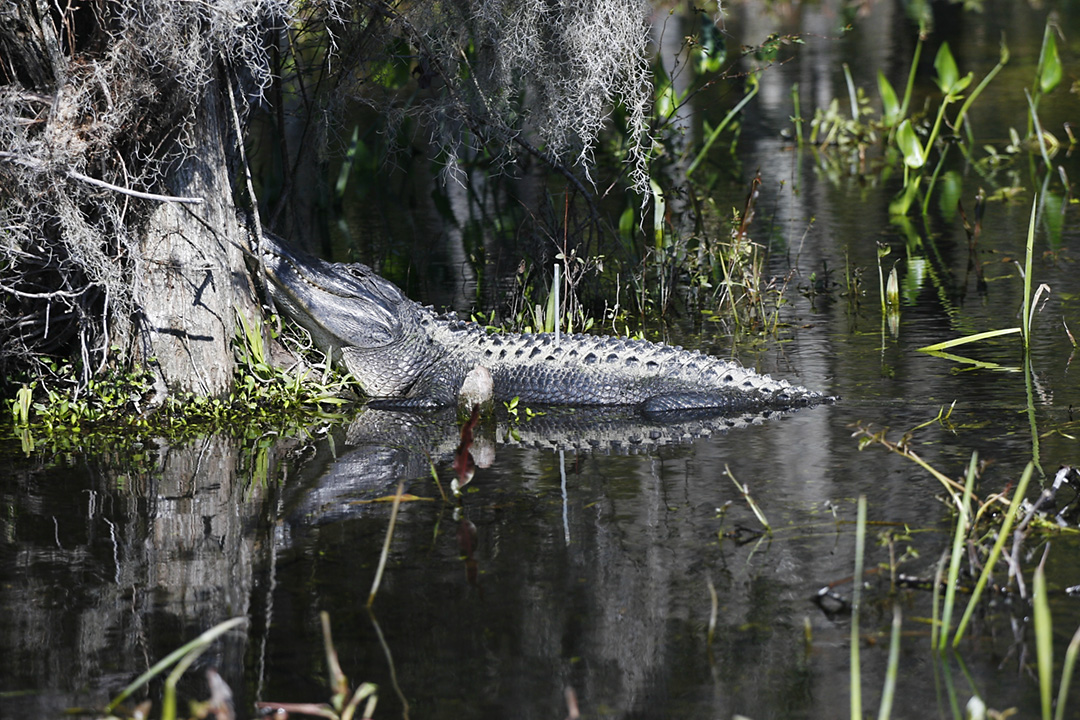
American alligator

Canon 30D, 70-200 f/4L, ISO: 200, aperture: f/4, shutter: 1/640

The ‘jungle cruise’ at Wakulla Springs State Park is a must do when visiting the Florida panhandle.  Wildlife viewing and photographic opportunities abound from 30-foot long open sided boats that cruise along a 3 mile section of the Wakulla River.

A short telephoto lens provides enough reach to capture most wildlife along the river.  Tripods are impractical in the boats so make sure you use a fast enough shutter speed to avoid blurry photos.  Under low light conditions, kicking up the ISO and using a big aperture will help keep the shutter speed fast enough to hand hold.  Having subjects that aren’t moving helps too,  like the alligators that lie motionless, watching and waiting.

More information about Wakulla Springs can be found here:

http://floridastateparks.org/wakullasprings/default.cfm

Posted in Wildlife | Tagged , | Leave a comment

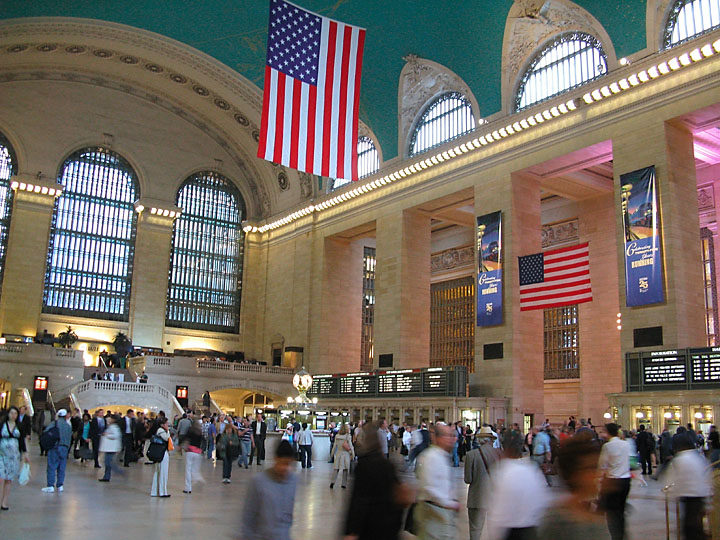
Grand Central

Grand Central Station, New York City

Canon PowerShot, ISO: 200, aperture: 2.8, shutter: 1/6 second

Grand Central is a busy place, day or night.  It’s a great place to sit and watch the flow of people and subways.  I find it amazing that the transportation system in the city works as well as it does, people and trains going every direction in relative order.  We were on our way to a Yankee game, their last season in the house that Ruth built.  We boarded the #4 to the Bronx and headed north.  The train was absolutely packed with people… shoulder to shoulder, barely room to breathe.  Being unsure what stop to get off for the stadium we asked an older woman for directions.  She said, ‘you’ll know…everyone will be getting off’.  When we got to 161 street, everyone got off… including us.  The game was awesome.

Above photo: using a slow shutter speed helps to convey that sense of motion as people hurry through the station.

Above: Jeter at the plate, Yankee Stadium.

Posted in Landscapes | Tagged , , | Leave a comment

Oystercatcher

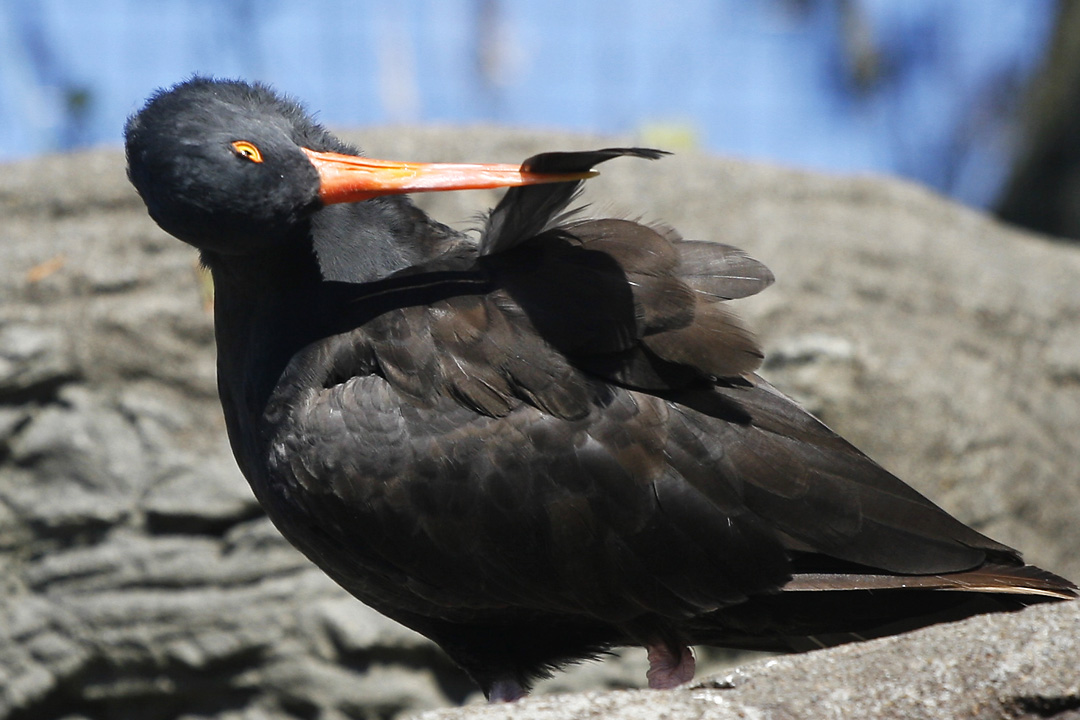
Oystercatcher preening

Canon 30D, 70-200 f/4L, ISO: 200, Shutter: 1/1000, aperture: f/4

I have countless photos of birds on a stick, birds on a rock, birds on about anything.  By far, the most interesting shots are birds (or any wildlife, as far as that goes) in action.  Wildlife portraits are nice for the details they reveal in the fur or feathers, but action shots tell a more complete story of the critter.  Their personality and habits come to life.  The more we know and understand wildlife, the more we appreciate them for their unique qualities and beauty.  That appreciation often moves us to protect them and their habitats.  Photography has historically played, and continues to play, a big roll in preserving wild lands for wildlife… to the benefit of all of us.

Posted in Wildlife | Tagged | Leave a comment

Depth of Field

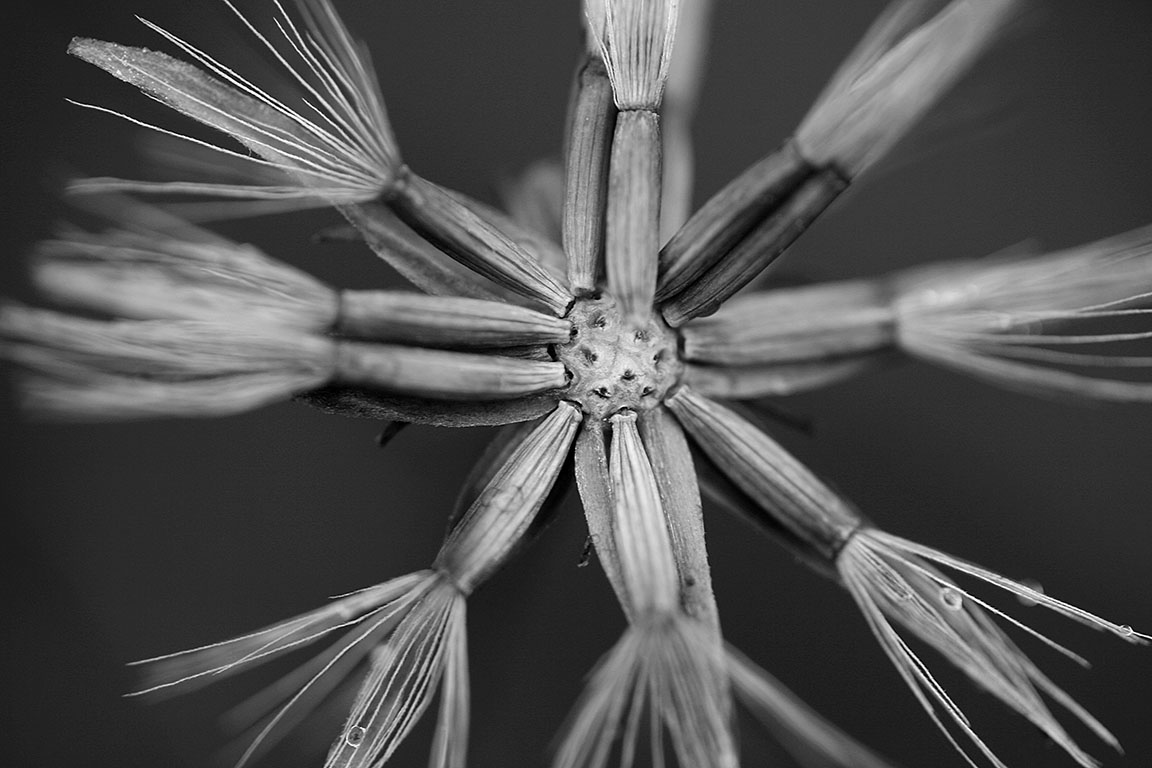
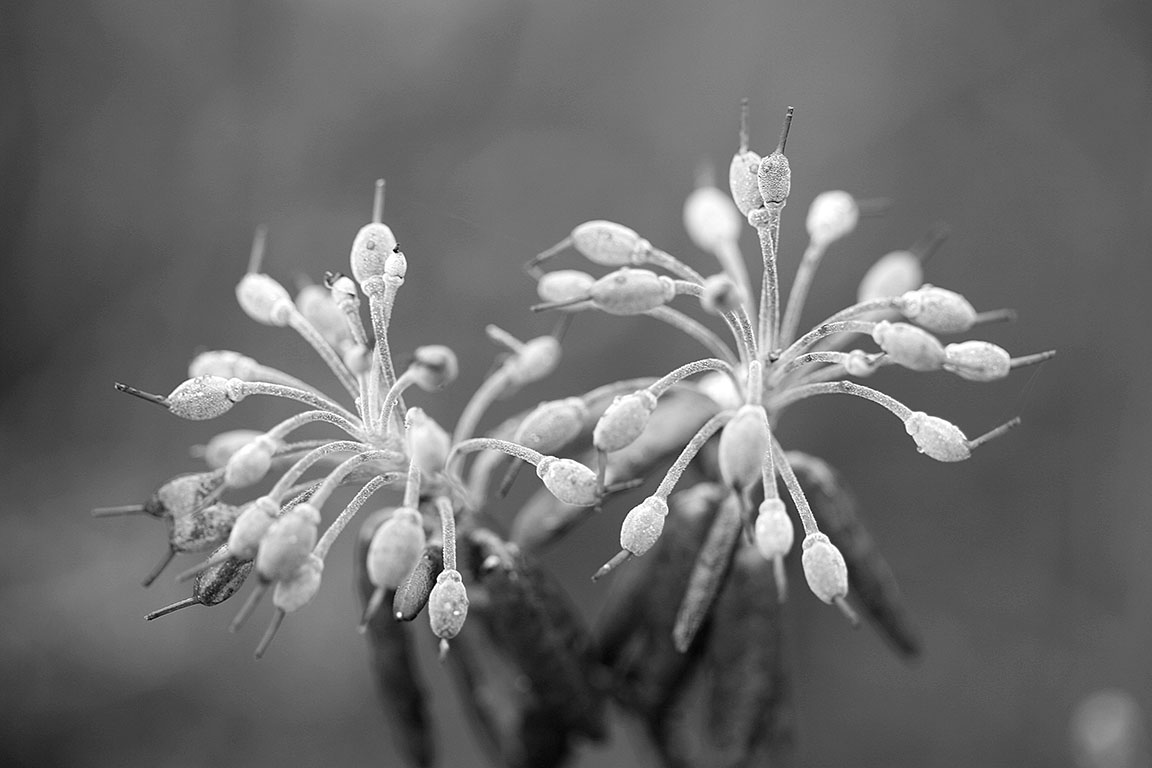
Canon 30D, EF-S 60mm f/2.8 macro, tripod: yes, B&W conversion with Lightroom

Some subjects are just more compelling in black and white.  Flowers, especially dried ones, seem to fit that category.  I marvel at the intricate detail of patterns in nature.  Flowers are a favorite subject for that reason.

Deciding on the depth of field is usually a matter of choice for the shooter.  Besides using a small aperture, some photographers are achieving greater DoF by layering separate images that are focused on different parts of the subject and combining them in Photoshop.  I usually prefer some of the flower out of focus, not sure why, just my preference.

Posted in Landscapes | Tagged , | Leave a comment

Japanese Garden, Portland, Oregon

Waterfall, Japanese Garden, Portland, Oregon

Canon 30D, 17-40 f/4, ISO: 100, aperture: f/22, shutter: 3.2 seconds, filter: circular polarizer, tripod: yes, cable release: yes

Yesterday’s post was about using a slow shutter speed to blur water movement.  Today’s photo is another example of that.  This time the shutter was 3.2 seconds.   To get the right exposure at ISO 100 and keep the 3.2 shutter speed, I had to use f/22, the smallest aperture for this lens.  f/22 also yields the maximum depth of field, which is usually desireable for a landscape photo, especially if there is something in the foreground that you want to be in focus.  There are other considerations… every lens has a sweet spot that provides the ‘best’ overall edge to edge picture quality.  The general rule of thumb, for the sweet spot, is 2 stops down from maximum aperture.  For this lens, 2 stops down from f/4 is f/8.  So, in theory, f/8 would yield the best overall photo.  I could have got to f/8 by using a faster shutter speed, but would have lost the blurred water.  Another consideration is the depth of field.  f/8 would yield a shallower depth of field than f/22, which would have been fine for this photo since nothing is in the close foreground.  So you have options to get to the sweet spot and maintain a slow shutter speed…  1) come back when there is less available light so a larger aperture setting can be used at the same shutter speed (not always possible). 2) use a lower ISO setting (not possible with this camera, 100 is minimum).  3) use a neutral density (ND) filter to reduce the light entering the lens…. which gets me to the point of this post.  Lesson learned: when working around water, especially at midday when ambient light is usually the brightest, a ND filter is very handy.  Unfortunately I left mine at home.
Posted in Landscapes | Tagged , , , | Leave a comment

South Umpqua River, Roseburg, Oregon

South Umpqua River, Roseburg, Oregon

Canon 30D, 17-40 f/4L, ISO: 100, aperture: f/22, shutter: 4 seconds, circular polarizer filter, tripod: yes, cable release: yes

Most of us are drawn to water.  It has magnetic qualities and provides solace in a tumultuous world.  Water and photography go together like chocolate chip cookies and milk.  Well, something like that anyway.  The shutter speed is my key consideration when including water in a photograph.  Obviously the longer the shutter speed the more motion and blur will be conveyed in the photo.

This image was captured from the bank of the South Umpqua River in southwest Oregon.  The Umpqua Valley is know for its trophy fishery and in more recent years, world class wine.  Oregon’s oldest vineyards can be found in this part of the state.

The eddy in the foreground was collecting river foam and creating an interesting circular pattern on the water.  I used a 4 second shutter speed to capture the movement of the foam and water.  A polarizer was used to reduce the glare so the rocks on the streambed could be clearly seen.  Using a wide angle lens set to f/22 helps keep the near-to-far elements in focus.

Posted in Landscapes | Tagged , , | 1 Comment